Already have an idea which application you want? Fill out a RFQ to get in touch

Automotive

Existing hydraulic manipulator was not as effective at placing bars on the paint line hanger as a pneumatic manipulator would be. The “float” capability of a pneumatic manipulator and ease of maintenance convinced the customer to replace their hydraulic manipulator.
Increase in injuries during the tire stitching process.
Seat weight increased beyond single operator capability.
The different angles and locations of the bolts and a restricted work cell area. A total of four units must be located in the same area with each having a different nut setter doing a different task. The customer would like to reduce the cycle time and eliminate end-effector changes during the assembly process. The ultimate goal is to reduce shock absorbed by the operator.
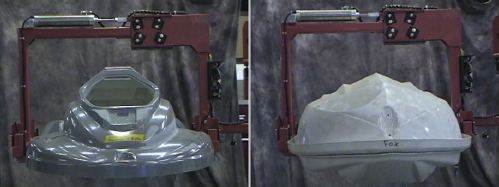
The same end-effector must pick up both the hull and deck, distinctly different weights and sizes of parts. A vacuum end-effector will not work, because of the lack of consistent surfaces between the variety of parts and proven marring by vacuum cups. The products are quite large, limiting the operators ability to easily see the backside of the part when actuating grip.
Safe3ly pitch heavy glass panels varying in size, weighing up to 150 lbs. up to 110°, from vertical to horizontal and rotate through the pitched horizontal axis to line up holes for installation.
Device must handle a variety of parts and part weights. Close work area makes it impossible to use a floor-mounted unit. Cycle time is short.
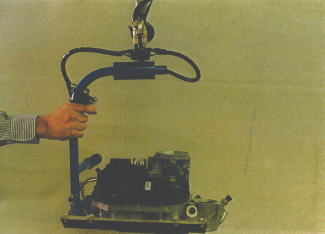
Existing hook hung end-effector was used to unload blocks from a pallet, but was unable to unload parts from a new overhead conveyor. Operators were unloading blocks by hand, flipping them over 180° and placing them on an outbound conveyor.
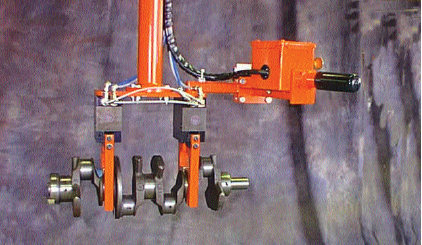
Picking up the crankshafts and transferring them to the inspection table was repetitive. The crankshafts weigh 25 lbs. and were difficult to pick up by hand.