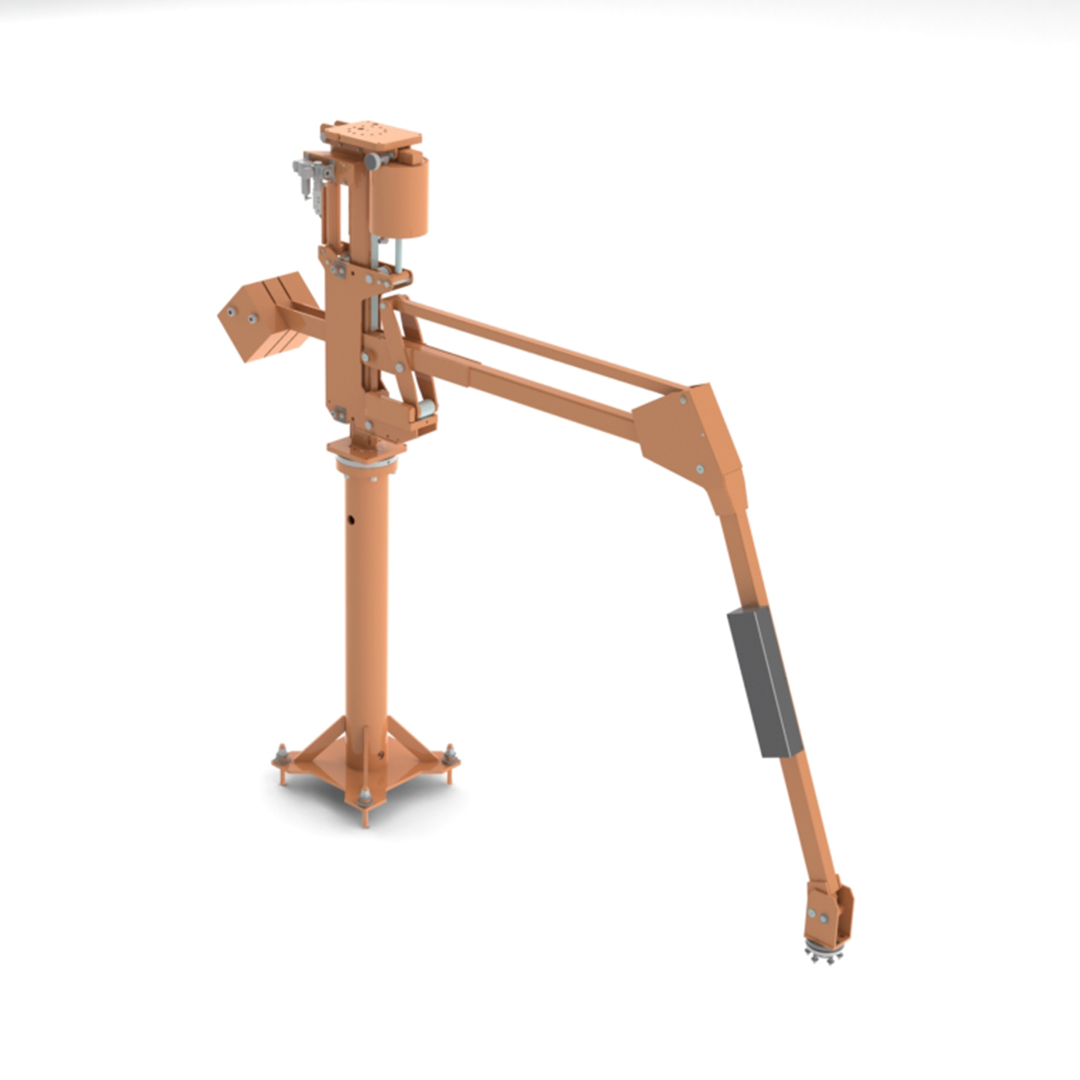
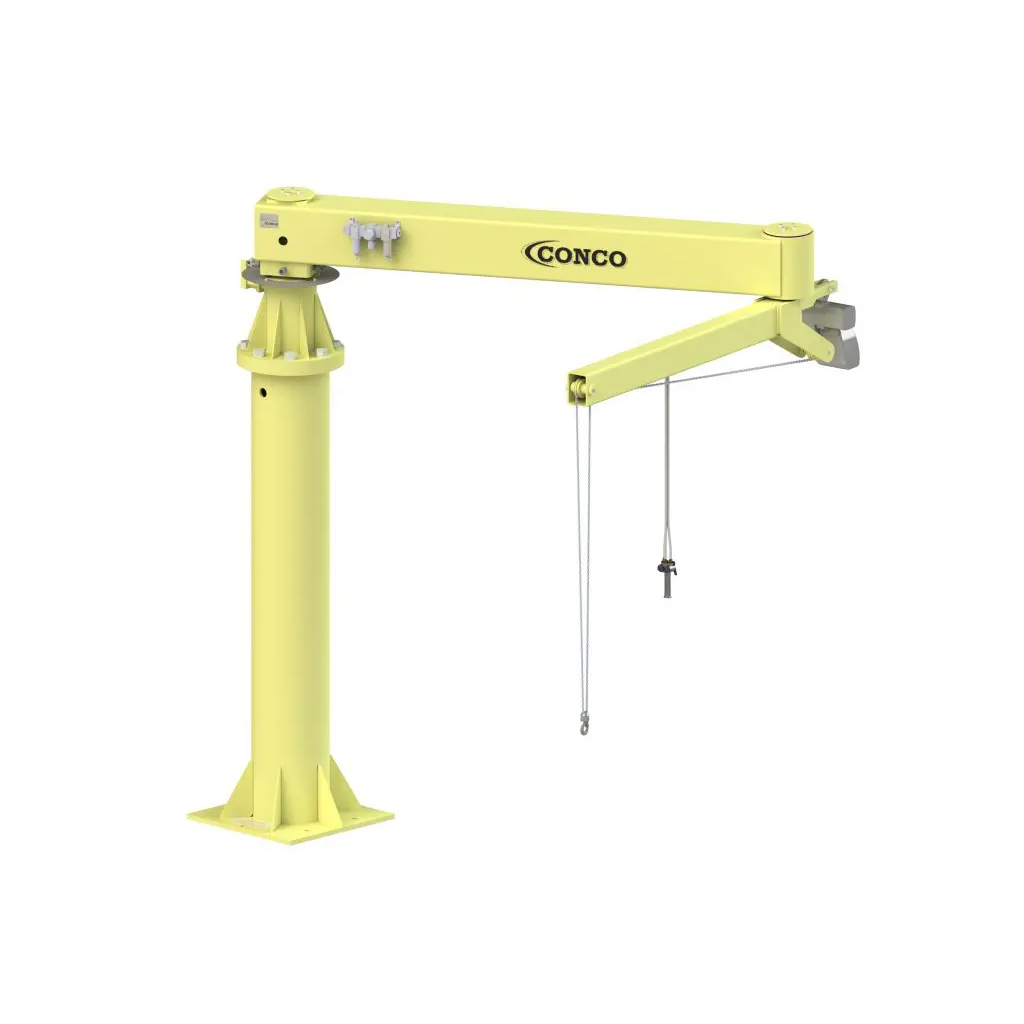
Our Conco line of products feature standard products with quick leadtimes that will get your operation up and running as quickly and efficiently as possible.
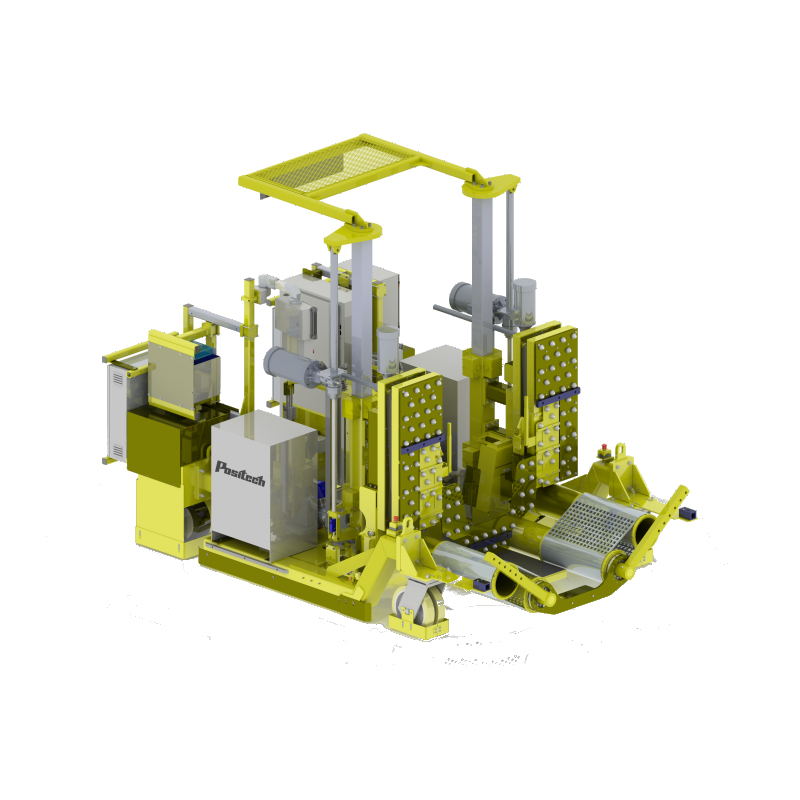
Does your application require something outside of your regular industrial manipulator? We'll work with you to custom design application solutions that will be exactly what you need.
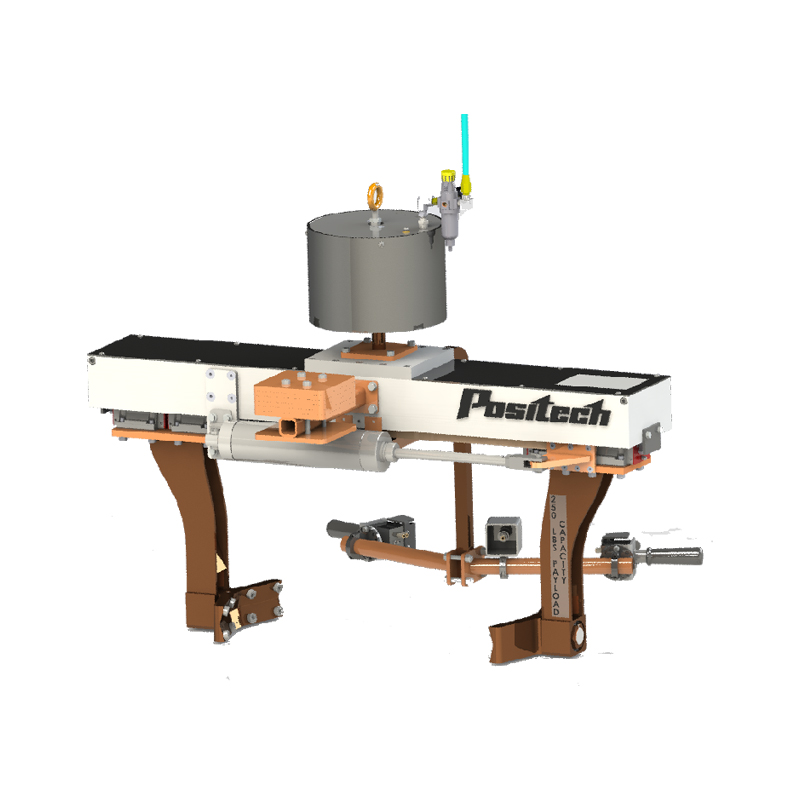
Beyond our base machines, Positech can also custom design end-effector tooling that will meet your part and operator needs. Tooling can include specialized pneumatic, electric, and hydraulic circuitry.
With nearly 40 years of experience, we can meet with your project team on-site at your facility (engineering, quality control, safety, production, and operators) to clearly define the application and the expected productive output of the project.
Installation Services
Positech can supply supervised installation (turnkey or partnership) with local contracted installation personnel or your internal maintenance personnel to assure a safe, efficient installation.
Integration Services
Positech can source and supply entire work cell solutions that may include lift assists, lift tables, conveyors, overhead rails, carts, fixtures, and other ergonomic solutions for a total project solution.
Operator and Maintenance Personnel Training
After a new piece of equipment or process is installed in your facility, it is very important that the operators, production people and maintenance personnel are trained to operate and maintain this installation safely and efficiently.
Planning & Layout Design
Positech can supply 2D and/or 3D layouts and profiles of the existing area and the product flow and production enhancement of the completed project.
Long-Term Service Support
Positech has 24-hour phone support, preventative maintenance services and spare parts support for the life of the equipment.
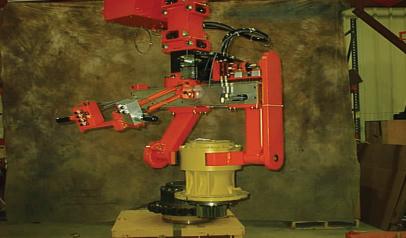
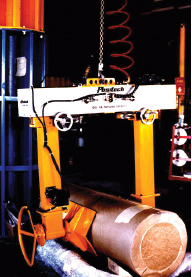
Operators were using a chain and hoist solution to transfer parts. It was deemed an unsafe environment with several dropped parts. Accurate placement in workstation positioners and pallets could not be achieved. Operators were not meeting cycle times with prior handling method.
The bucket is heavy when full and the sharp spikes presented a danger to people handling the bucket. Since the contents are liquid, spills are always a concern. Also, the manipulator must be washed down daily with hot, soapy water from a high pressure washer.
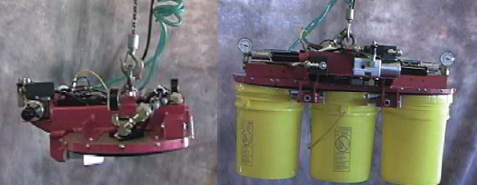
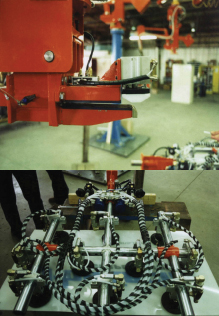
Different sized steel and plastic buckets are manually picked from a 34″ high conveyor and placed onto a 5″ high pallet on the floor and then stacked three high. End user would like to safely and securely handle three buckets at the same time to reduce repetitive motion stresses while increasing productivity.
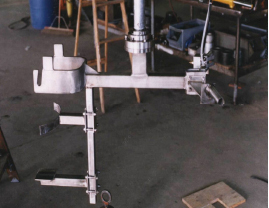
Safe3ly pitch heavy glass panels varying in size, weighing up to 150 lbs. up to 110°, from vertical to horizontal and rotate through the pitched horizontal axis to line up holes for installation.
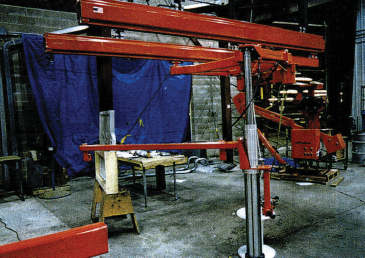
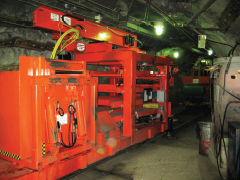
Limited work space, multiple obstacles, and heavy parts lead to ergonomic problems. Restricted power sources and underground environmental conditions limited the available equipment to perform the tasks. The end-user was looking for a solution to improve operator ergonomics as well as the overall efficiency of this maintenance process.